Showing posts with label Church. Show all posts

Thursday, January 8, 2015

Christian Magistracy in the RPCNA—Then and Now, Part 1: Theonomy


Historical Theonomy
A steadfastly theonomic church in the United States…

Did you know that for most of the 19th century there was a steadfastly theonomic church in the United States? This small denomination held firmly to the original version of the Westminster Confession of Faith, as adopted by the Church of Scotland in 1647. The American revisions of 1788 were regarded as egregious mutilations.

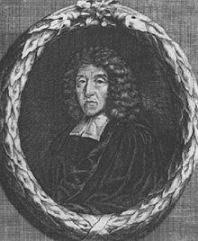
Although small, it had an unusually high profile in comparison with its size. One of its first Pastors, Alexander McLeod, declined an invitation to become Vice-President of what is now Princeton University,[1] preferring to serve his congregation in the City of New York. Another Pastor was Samuel B. Wylie. His theonomic publication, The Two Sons of Oil, so outraged a U.S. Congressman, William Findley, that he wrote a full length book (~382 pages), attempting to refute it.[2] Pastor James Renwick Willson, residing at the time in Albany, N.Y. served as a chaplain to the New York State Assembly. His sermon series, “Prince Messiah,” so drew the wrath of the Assembly that a mob was commissioned to publicly burn the preacher in effigy before the State House door.[3]

The name of the church was The Reformed Presbyterian Church of North America (RPCNA). Its heritage went back to the Reformation, and later to the 17th century Scottish Covenanters like Donald Cargill who proclaimed:

We shall say this one word more, there is one Great Thing Folk stumbles at in that Paper [the Queensferry Paper, a Covenanter manifesto of which Cargill was a co-author] that Kings ought to Rule or Judge according to the Judicial Law; and that these Laws Kings ought to Rule by, ought to be according to the Word of GOD, And think ye this a Great Wrong? The People of GOD was ruled Two Hundred Years and upwards by this Law only, and can any be fitter to be a Law-Giver than GOD?… So the Law of GOD should be our Law. Where the Law of GOD is received [is] where Christians are; Let Christians go to the Law which GOD has found out; And let Heathens and Turks go to the Law that Nature finds out.[4] (italics and capitalization as in original)

Cargill’s notion of Kings ruling and judging “according to the Judicial Law,” legislating “according to the Word of GOD,” and his dismissal of the viability of natural law, are of the very essence of Theonomy. A clearer summary of what Theonomy is all about would be difficult to find anywhere. In the Queensferry Paper he makes it clear that he is excluding the ceremonial and typical elements of the judicial law.

The RPCNA, of course, still survives to the present day but not in a form that past worthies like James R. Willson would be able to recognize. They would be deeply disturbed to find the current Testimony of the church has gutted the Westminster Confession by striking out those portions which deal with Reformed Magistracy, including the Establishment Principle—reflecting a major shift towards a pluralist and Anabaptist worldview.[5]

What went wrong? Many things, but mainly as it became increasingly sidetracked by secondary concerns—for example, by aligning itself with the “temperance” movement—it began to lose its commitment to the Great Commission (Matt. 28:18-20) and the Crown Rights of King Jesus. Eventually, during the first half of the 20th century, the RPCNA found itself sinking steadily deeper into theological liberalism.

All was not lost, however. The Lord used a few good men like J. G. Vos who worked tirelessly to reverse the trend,[6] and recover many basics of the Reformed Faith, but not all. Sadly, there was continued regress in the field of Reformed Magistracy. In spite of this, efforts at reformation were continued, especially by the late Raymond (Ray) Joseph who had a clear vision of Theonomy and Magistracy, reinforced with a healthy Postmillenialism.

The theonomic roots of the RPCNA are documented in the article below, starting with the Scottish Reformation. Moving to the 19th century, extracts are provided from the writings of several early RPCNA pastors which demonstrate their commitment to Theonomy as an integral part of Christian Magistracy. The article concludes with a brief outline of the more recent history of the RPCNA, including its departures from the Westminster Confession, leading up to the present day.

Note: readers unfamiliar with the notion of a twofold judicial law and related terms like “particular equity” and “common equity” are recommended to pay special attention to pp. 15-21 on the Westminster Confession of Faith.
___________________________________

[1] Samuel Brown Wylie, Memoir of Alexander McLeod, D.D. New York (New York, NY, 1855), 124, https://archive.org/details/memoirofalexander00wyli.
[2] Samuel B. Wylie, The Two Sons of Oil; or, The Faithful Witness for Magistracy and Ministry upon a Scriptural Basis, 3rd ed. (Philadelphia, 1850), https://archive.org/details/twosonsofoilorfa00wylirich. The original edition appeared in 1803; William Findlay, Observations on “The Two Sons of Oil” (Pittsburgh, 1812), https://archive.org/details/observationsonth00findrich.  Regrettably, in later life, Wylie repudiated the position he had taken in The Two Sons of Oil. Church historian, W. Melancthon Glasgow, writes, “This is the best presentation of the position of the Covenanter Church that has been written, from which the author departed in 1833.” W. Melancthon Glasgow, History of the Reformed Presbyterian Church in America (Baltimore, 1888), 742. https://archive.org/details/historyofrefor00glas.
[3] Glasgow, History, 726; “Persecution,” The Albany Quarterly, ed. James R. Willson & Samuel M. Willson, 1 no. 1 (1832): 19 (repeated page no.), https://www.rparchives.org/albany.html; James S. Kabala, “‘Theocrats’ vs. ‘Infidels’: Marginalized Worldviews and Legislative Prayer in 1830s New York,” Journal of Church and State 51, no. 1 (Winter 2009): 86, doi:10.1093/jcs/csp002.
[4] A Lecture and Sermon Preached at Different Times by that Faithful and Painful Minister of the Gospel, and now Glorified Martyr Mr. Donald Cargill (n.p., n.d.), 10. Online at: “A Lecture and Sermon….” True Covenanter, accessed February 15, 2012, http://www.truecovenanter.com/cargill/cargill_lecture_and_sermon_re_unlawful_association.html.
[5] The Constitution of the Reformed Presbyterian Church of North America (Pittsburgh, PA: Crown & Covenant, 2010), A-73, A-101, http://reformedpresbyterian.org/images/documents/constitution2010.pdf . Note the rejection of most of WCF 23.3, and all of WCF 31.2. This is surprising because these paragraphs were never understood in any Erastian sense since the adoption of the WCF by the Church of Scotland in 1647.
[6] Brian Faris, “The Original RP Blog,” Gentle Reformation (blog), March 8, 2011, http://gentlereformation.com/2011/03/08/the-original-rp-blog/.


photo credit:

© TrueSteelite / Wikimedia Commons (CC BY -SA 3.0) (license)
Retrieved January 6, 2015 from http://commons.wikimedia.org/wiki/File:James_R._Willson.jpg
Picture edited to accommodate text


Tuesday, February 18, 2014

The State's Obligations Regarding the Church (Wilhelmus à Brakel)

The Dutch Reformed theologian Wilhelmus à Brakel (1635-1711) writes the following on the state's obligations with regard to the church:


The duties of the government with regard to the church are threefold. It has 1) the power of protection, 2) the power to legislate concerning external circumstances, and 3) the power to subdue evil influences.


First, the civil government is empowered to protect the church. It must protect the church from all oppression from without and within, so that no one will disturb or prevent either the exercise of religion or the meetings of consistories, Classes, and Synods. It must preserve the freedoms and the spiritual privileges which Christ has given to the church, so that she may use and exercise them without impediment. It must remove all external obstacles which either could be detrimental to religion or impede the growth and well-being of the church. It must do everything possible to promote religion so that the church may flourish under its protection and “may lead a quiet and peaceable life in all godliness and honesty” (1 Tim 2:2). Such was the practice of the godly kings David, Solomon, Asa, Jehoshaphat, Hezekiah, and Josiah—a fact which can generally be observed in the books of Kings and Chronicles.

Secondly, the civil government has power to legislate concerning external circumstances. As such it can maintain order as far as the external circumstances of public worship are concerned—such as the most suitable time for and place of worship, as well as that the welfare of the civil state be not impeded. It must also call ecclesiastical synods together, and see to it that other ecclesiastical assemblies are held, so that they in turn may promote the internal well–being of the church.

Thirdly, the civil government has the power of control with regard to ecclesiastical matters. It must see to it that members of the clergy—ministers, elders, and deacons—discharge their duties and not be negligent in this regard, as well as that they adhere to the established church order which is according to God's Word. It must publicly oppose those who by false doctrine and immorality trouble the church, or who by evil philosophies and opinions disturb the civil state as far as political matters are concerned. It must also prevent the continuation of such practices. It must exterminate false religions. It must promote the reformation of the church if she becomes entirely degenerate in doctrine and morals, and by the use of all political means imaginable restrain opponents and compel those who forsake religion to observe their duty, etc. In this manner Moses (Exod 32), Asa (2 Chron 14), Jehoshaphat (2 Chron 17), Hezekiah (2 Chron 29, 30), Josiah (2 Chron 34), and Nehemiah (Neh 13:30-31) were engaged in the work of reformation. How blessed is the church and the civil state which functions in this way, and where the church and the civil government, each within their own sphere of influence, are faithful in the discharge of their tasks!

We thus observe that none ought to be of the opinion that the government is not to be involved in the church at all, ought not to be concerned about her, and ought merely to be the blind executor of whatever the church wishes her to carry out. There is a certain Jus majestatis circa sacra; that is, a rightful claim, power, or duty of civil governments with regard to that which is holy. The Belgic Confession speaks of this in Article 36: 
And their office is, not only to have regard unto, and watch for the welfare of the civil state; but also that they protect the sacred ministry; and thus may remove and prevent all idolatry and false worship; that the kingdom of antichrist may be thus destroyed and the kingdom of Christ promoted. They must therefore countenance the preaching of the Word of the gospel everywhere, that God may be honored and worshipped by everyone, as He commands in His Word.
It is the duty of civil government to uphold not only the second table of the law, but also the first. It must see to it that God is honored. It may not tolerate any idolatry, worship of images, or any false religion within her jurisdiction, but must rather eradicate these. It must prevent the vain use of God’s Name practiced by cursing, swearing, and blasphemy. It must prevent the desecration of the Sabbath, punish violators of this commandment, and see to it that the gospel is proclaimed everywhere within its jurisdiction. It must see to it that the church, as the darling of the Lord Jesus, is protected and preserved; and that neither internal dissension nor any external oppression disturb or destroy the church, but that instead she be safely preserved in the use of the privileges and liberties which her King Jesus has given her.

The government must be engaged with regard to all these things, but not formaliter; that is, by intruding into the very essence of the matter at hand. It must do so objectively; that is, deeming her (the church) to be the object of its activity. Therefore we say that the civil government has authority with regard to the church, rather than in the church. Neither civil governments nor any other individual may exercise power in or over the church, for Jesus is her only King. The civil government has, however, an obligation with regard to the church. There is a significant difference between “in” and “with regard to.” A civil government has authority with regard to marriage, but no authority in the marriage; with regard to a household, but not within the household. It likewise has authority with regard to the church, but not in the church. 


"The Responsibility of the Civil Government with Regard to the Church," in Wilhelmus A. Brakel, The Christian's Reasonable Service: Volume Two. , trans. Bartel Elshout, ed. Joel R. Beeke (1992), 178-180. Retrieved February 18, 2014 from http://biblicalspirituality.files.wordpress.com/2010/03/reasonableservicevol2-indexed.pdf

Thursday, January 23, 2014

Presbyterianism or Congregationalism? Two Views

The Gospel Coalition has two concise articles making the case for both Presbyterian and Congregational church government. Presbyterian polity is defended by Mark Jones, and Congregational polity is defended by Hunter Powell. Both are interesting reads.


Why You Should Be a Presbyterian 
by Mark Jones

Despite what you may think, Presbyterian ecclesiology is not primarily defined by churches governed by elders, but by churches governed by presbyteries. Presbyteries can encompass the elders of a local church, a regional church, and what is termed a "general assembly." This view is established from the oneness of the visible church. Based on the sufficiency of Scripture, Presbyterians hold that the church is governed jure divino (by divine right). There are certain fixed principles in the government of the church. We hold that Christ has blessed the church with the Scriptures, church officers, and sacraments. In doing so, Christ has "ordained therein his system of doctrine, government, discipline, and worship, all of which are either expressly set down in Scripture, or by good and necessary inference may be deduced therefrom" (Presbyterian Church in America Book of Church Order).


Why You Should Be a Congregationalist
by Hunter Powell

Fear, Loathing, and Extreme Democracy

Congregationalists, Presbyterians, and the reformers have all historically agreed Matthew 16:18-19 and Matthew 18:15-18 deal with excommunication and church discipline (see, for example, the Heidelberg Catechism questions 83-85). These verses, therefore, define where church power is located. To cast members out of communion with the visible church is the most awesome and fearful task given to the church in Scripture. If, as the Reformation taught us, the definition of the church is the Word and the sacraments rightly administered, then locating the power to remove a person from the sacrament of communion will delimit the boundaries of church government.


Wednesday, December 18, 2013

How Does Jesus Christ Evaluate Local Churches? (Geoffrey Botkin)


Every church member needs to understand that Christ’s evaluation addresses the deeds of every person publicly associated with the church.


Tuesday, May 28, 2013

What are Militant Churches? (Geoff Botkin)


The following is a part of a summary written by Jason Matyas of a lecture by Geoff Botkin at the 2013 Family Economics Conference in St. Louis:


A Militant Church is a church that is not playing around with deep spiritual realities of conflict and warfare.  It’s not playing – it’s fighting.  It’s not spiritualizing things, it’s dealing in realities.

The church is supposed to teach Christians how to conquer, not surrender. 
“All too often the church is like a coffin. Instead of being a training ground and an armory for the army of the Lord, it is a repository for the dead. The people within have not the life and power to occupy any other ground, …to conquer in the realm of politics and economics, to “occupy” in Christ’s name even one area of life and thought and to bring it into “captivity” to Jesus Christ (Luke 19:13, II Cor. 10:5). Where Christianity is confined to the church, it is dead, and it is only a corpse claiming that name but having none of the life nor the power thereof (II Tim. 3:5).”   — RJ Rushdoony 
Militant Churches are:
  • Fully subordinate to the Commander and King
  • Advancing Christian doctrine against real enemies of the King
  • Gaining ground by always reforming doctrine and starting new bodies
  • Training and deploying new leaders
  • Actively destroying ideas raised up against the knowledge of God
  • Taking gospel truth into the culture at the risk of personal martyrdom
  • Taking dominion from the enemy in victorious operations


______________________________________

photo credit: Sarah Serven


Thursday, March 21, 2013

Character Assassins: Dealing with Ecclesiastical Tyrants and Terrorists (by Peter Hammond and Brian Abshire)

Note: this site highly recommends this book, which is an excellent handbook about biblical conflict resolution and dealing with abusive church leadership.

Overview from co-author Brian Abshire:

"Along with the rise of Islamic Jihad in the world, we are witnessing an increase in ecclesiastical terrorism. There are those Christians who see it as their calling to sabotage the support bases of others, to launch sneak attacks, ecclesiastical Pearl Harbours, to destroy missionary towers, assassinate characters, hijack ministries and blow up bridges of relationships. These ecclesiastical terrorists seek to intimidate and to sow seeds of fear and doubt.

"There are those who have a ministry of criticism and a gift of discouragement. All too many dedicated Christian workers have fallen victim to ecclesiastical bullies and those with a ministry of backstabbing. Pride, jealousy and covetousness, dysfunctional churches and dysfunctional members collectively present a serious threat to the fulfilment of the Great Commission in our generation.

"There is a desperate need to expose the increasing threat of pathological antagonists and abusive churches. In order to encourage and empower those involved in missions and ministry who are being targeted and undermined, this book attempts to both expose the problem and to provide practical and Biblical solutions. For this purpose the light of Scripture and experience is shone on the dark dealings of those relentless critics who prefer to shoot from the shadows."


Wednesday, February 27, 2013

Francis Turretin on the Distinct Duties of Civil and Ecclesiastical Rulers

IX. Although the care of religion belongs to the magistrate, political and ecclesiastical power are not on this account confounded. They are concerned with it in a different way; some are the duties of that, others of this.  The former is concerned only about extrinsic things, as to their external disposition and order (which belong to the worship of God); the latter, however, about internal things (to wit, the administration of those things which pertain to the worship of God).  He does not exercise the ministry of the word who admonishes and corrects a minister erring in doctrine or delinquent in life and removes an obstinate or scandalous one.  He does not baptize who prohibits the profanation of baptism, who takes care that holy things should be done in a holy manner.

X. As it is not lawful for bishops to draw the sword, so neither is it lawful for princes and civilians to handle the thurible [sic]; as to the preaching of the word, the administration of the sacraments and other things which formally belong to pastors and are of the essential reason of their office.  But it does not thence follow that the other functions concerning the government of the church do not belong to the believing magistrate.  Although it is not lawful for bishops to engage in politics or to plead in court, still it is lawful and incumbent upon them to admonish and to exhort magistrates to do their duty.  And if they at any time fall in it, they are to rebuke and to denounce the judgment of God against them.  So, in turn, although the preaching of the word does not pertain to magistrates, still it is lawful for them to admonish and rebuke bishops and pastors neglecting or wandering from their office; nay, also to bring to order transgressors and to take care that the ministry be not corrupted and religion to suffer no harm.

Francis Turretin, Institutes of elenctic theology, trans. G. M. Giger, ed. J. T. Dennison (1679; 3 vols, Philipsburgh, 1992), iii, 318-19.


Thursday, September 13, 2012

Reformation Scotland's Overlap between Church Discipline and Punishments for Civil Crimes (Theonomy Applied)

During the Reformation, Scotland maintained a close relationship between church courts and civil courts for the administration of church discipline and punishments for civil crimes. 

Whether or not Scotland was fully biblical in how it went about this, it rightfully attempted to apply the church's and the state's respective biblical duties to apply sanctions, which can at times overlap (for instance, blasphemy and adultery both warrant ecclesiastical discipline and civil punishment).

The following from Calvinism in Europe, 1540-1620 discusses further Reformation Scotland's approach to church discipline and civil crimes:
[T]hough the jurisdiction of the church remained separate from that of the state, kirk sessions and bailies (magistrates) usually cooperated closely. The sessions might call on the assistance of the bailies to bring the recalcitrant to book and they delated offenders to the burgh courts for 'correctioun civilie'. Sometimes the bailies attended the kirk session so that fornicators received both spiritual and civil punishment at the same time, their sentences being recorded in the consistorial act book. The 'interlock of church and state' in Scotland tightened where a rural kirk session obtained a commission from the privy council to impose both spiritual and civil penalties. As a result the church courts in Scotland could put fornicators in the 'jougs', scolds in the 'branks' and fine those who breached the sabbath. ...bailies frequently attended kirk sessions either in their capacity as elders or as municipal office-holders ...

The discipline of the kirk session contributed in the view of Geoffrey Parker, to 'the taming of Scotland'. His analysis of the kirk session records for St. Andrews suggests that the kirk could, at least temporally, change sexual mores within the locality. Furthermore, the Scots Parliament endorsed, up to a point, the demands of the kirk for rigorous penalties against adultery, fornication, blasphemy and the profanation of the Lord's Day.[1]

Notes
__________________________

[1] Andrew Pettegree, Alastair Duke, and Gillian Lewis, eds., Calvinism in Europe, 1540-1620 (New York, NY: Cambridge University Press, 1996), 14, 15.


Note about the Theonomy Applied Series: In quoting any particular law, we do not necessarily endorse every aspect of that law as biblical, whether it be the prohibition, sanction, court procedure, etc. Rather, we are merely showing the more or less attempt to apply biblical law in history, whether or not that application was fully biblical. Moreover, in quoting any particular law, we do not necessarily consider those who passed and/or enforced such a law as being fully orthodox in their Christian theology. Professing Christian rulers in history have ranged in their theology from being orthodox (that is, Reformed Protestants) to heretical (for example, Roman Catholics).


Thursday, August 2, 2012

Chick-Fil-A, A Hot Van, and the Key to Marriage


The Van Was Super Hot, and We Were Hungry!
I was sitting in a hot van in the intersection of Highway 98 and Capital Boulevard in Wake Forest North Carolina. The mission? Lunch at Chick-Fil-A. No air conditioning in this vehicle, so this was a big sweaty deal. We, like many of the patrons choking the right of way on the road were waiting in line to make a statement to our political leaders, our fellow citizens and the world. Our motivations varied, with some voicing interest in our right to free speech, some standing on the standard for biblical marriage, and others who would follow Glenn Beck or Mike Huckabee if they told them to jump off a bridge. Whatever their motivations, the people came out in force, wrapping lines around the restaurant, and flowing through the drive through like a line of army ants carrying away a picnic lunch. 


Like Moths to a Flame
It was easy to be impressed by the sheer volume of people engaging in this statement. In the end, I wondered, what is the point? What do we expect to accomplish by eating a chicken sandwich besides putting on a few extra calories? I don’t intend to take anything away from this demonstration of unity, but it does make one wonder how far many of these same people would go if we took out the act of buying a chicken sandwich, and inserted the act of speaking to a political official about the definition of marriage? What about sitting down with an active homosexual, and sharing the Christian faith? Would people still line up in droves to stand up for what they believe in. Pondering these things left me with a few nuggets of wisdom. People invest in a cause in proportion to their understanding of it’s worth, and the burden they feel of it’s weight. So, if standing up for the truth only costs me $8.75 and I get to enjoy a chicken sandwich on top of it, it’s doesn’t take much reflection on my part to decide if Biblical marriage is worth standing up for. One can have a peripheral understanding of marriage, and see all of their church buddies flocking to Chick-Fil-A, and get a cheap way out of a rather weighty issue, if it stops there. 


Nuggets of Wisdom
Marriage is a foundational institution in the Christian faith. It’s not peripheral, it’s not a sidebar, it’s not a subject that can be chalked up to, “whatever floats your boat”. Some people think that marriage is all about our happiness, or our need for companionship, but it is so much deeper than that. The Bible teaches us that a husband unites to his wife to paint us a picture. “Therefore a man shall leave his father and mother and hold fast to his wife, and the two shall become one flesh.” This mystery is profound, and I am saying that it refers to Christ and the church." (Ephesians 5:31-32 ESV) If marriage is redefined, or re-ordered, or made about our own selfishness, it’s as good as throwing paint thinner all over the picture that God has painted for us. He is showing us by our marital union how his relationship with His bride, the Church, works. Without Christ and the Church, we lose the meaning behind a wife submitting to her husband, and a husband can easily become a misogynist, or the wife can easily liberate herself into a broken relationship. Without the understanding of Christ and the Church, we lose the meaning behind a husband’s sacrificial love for his wife, and a wife can become overbearing, and a husband turns into a shell of a man, lacking in stability and purpose. But with the understanding of the blessed union of man and wife as a picture to the world of Christ and His Church, the definition of marriage carries more weight, and should burden those who are standing up for the Truth. With two wives, or two husbands, The Holy picture is totally lost, and a new picture of selfishness is painted.

What's a Christian to Do?
Should you go buy a chicken sandwich and take a stand for marriage? Absolutely. But it shouldn’t end there. With such an important issue at hand, and the foundations of the family being eroded away by every wind of understanding, much must be invested in its defense. The state must understand that it has no business in the definition of marriage. The only marriage that exists is that as it is defined by it’s creator, and it remains legitimate not because it is recognized by our lawmakers, but because it is ordained by the ultimate authority. 
I leave you with a few questions:

  • With such a precious picture at stake, what will you invest to stand up for it?
  • With such a weighty issue at hand, how much time will you spend with those who don’t understand?
  • If you don’t think it is such a big deal, can you be sure that you take the Bible as seriously as you ought?


Thursday, March 8, 2012

OPC Symposium about Family Integrated Churches planned for April 2; panelists include Kevin Swanson, Shawn Mathis, and Matthew Kingsbury


On April 2, 2012 in Denver, CO, an Orthodox Presbyterian Church (OPC) symposium is planned to take place about family integrated churches and like matters. Speakers for the symposium, titled "The Family in Crisis: Three Pastoral Responses,” include the Revs. Kevin Swanson, Shawn Mathis, and Matthew Kingsbury; and Rev. Greg Thurston is to be the moderator.

The panelists are to 1) present their views on how the Church should respond to the difficulties faced by Christian families today, 2) interact with one another, and 3) take questions from the audience.

Park Hill Presbyterian Church is hosting the event.

Rev. Kingsbury announced the following about the event:
Held in conjunction with the next stated meeting of the Presbytery of the Dakotas, this evening is intended primarily to further discussion within the presbytery. As this is a matter of great concern to all the Churches, however, we earnestly desire the interest and input of all the brethren.
We are unsure as to whether the event is open to the general public; the main target audience is the OPC leadership. 

Those who are not part of the OPC leadership but are interested in attending should contact Park Hill Presbyterian Church at http://www.parkhillpresbyterian.org/Contact.php

However, there are plans to make the event available at Sermonaudio.com.


Wednesday, August 31, 2011

Tony Konvalin discusses Divided the Movie on The Covenanter Report

The Covenanter Report welcomes special guest Tony Konvalin, elder at Sovereign Grace Christian Fellowship in Anaheim, California.  On this program we will discuss Family Integrated Worship in light of the Regulative Principle.  Hear how God is working through the church in ministering to families as they sing together, pray together, learn together, and grow together.  Tony will tell us how God is uniting the body of Christ to pass down His truth from generation to generation.  We will  also respond to the negative responses to Divided the Movie and their implications on our nation. 


Listen to internet radio with Covenant Commission on Blog Talk Radio


Friday, August 19, 2011

Watch "Divided" Free for just a little while longer

"Divided" will only be available for free viewings until September 15. Watch the movie in its entirety by clicking the image below


About the film:


"There is a crisis. Christian youth are rapidly leaving evangelical churches for the world. This well-recognized disaster has been the topic of significant discussion in recent years for both church leaders and modern new media. DIVIDED follows young Christian filmmaker Philip Leclerc on a revealing journey as he seeks answers to what has led his generation away from the church. Traveling across the country conducting research and interviewing church kids, youth ministry experts, evangelists, statisticians, social commentators, and pastors, Philip discovers the shockingly sinister roots of modern, age-segregated church programs, and the equally shocking evidence that the pattern in the Bible for training future generations is at odds with modern church practices. He also discovers a growing number of churches that are abandoning age-segregated Sunday school and youth ministry to embrace the discipleship model that God prescribes in His Word."